
Your buyers ask AI which business to choose. Are you in the answer?
AI tools answer with three or four names. We find out if yours is one of them, who is named instead, and what to fix first.
Choose a plan and create your account; nothing is charged until you start the plan. Prefer a conversation first? Book a 15-minute call.
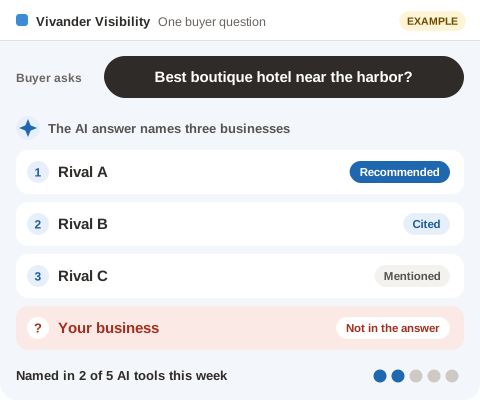
On the questions buyers ask before they know your name.
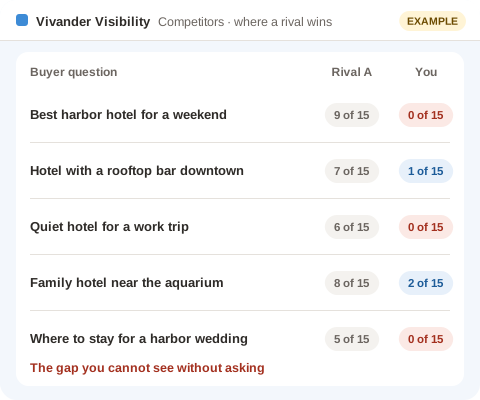
The rivals in your place, and the sites that put them there.
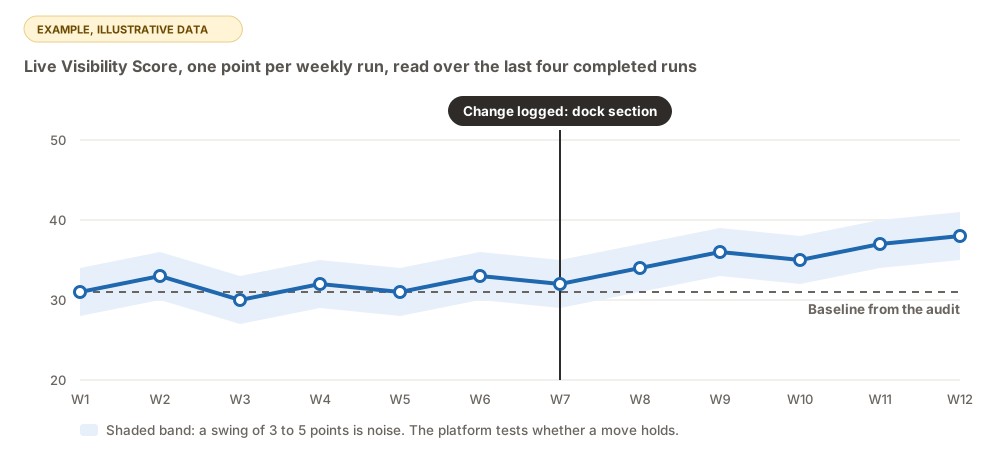
A weekly number that shows what each fix changed.
The buyer you lose inside an AI chat never reaches your website
A guest, a planner or a client asks AI for a shortlist. The answer names a few businesses and stops. Everyone else is left out.
a rival rising while you stand still
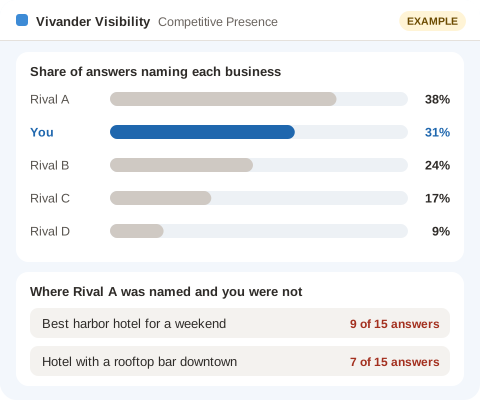
Across three runs, Rival One was mentioned in 40, 47 and 55 percent of answers. You held near 33 percent.
Example, illustrative data. See the examplechance the change was noise
From one run to the next, 19 question-and-tool pairs gained, 6 lost and 95 held. Mentions rose from 31 to 42 percent.
Example, illustrative data. See the examplein your analytics
A buyer who chooses a rival inside an AI chat never visits your site. The lost booking never shows up in your reports.
Three steps from "we have no idea" to a number you can move
You answer a few questions about your business and your buyers. The platform does the rest.
Real buyer questions, on the AI tools your plan covers, three times each, every week. Every answer is saved word for word.
Mentioned, cited or recommended. Which rivals were named. Which websites the AI leaned on.
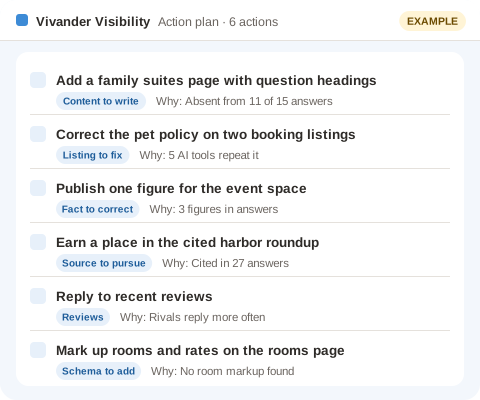
A ranked action plan, then the same questions asked again each week so you see the change.
You hear from a guest that "ChatGPT sent us somewhere else" and have no way to check.
You open the answer, read why the rival was chosen, and see the fix on your to-do list.
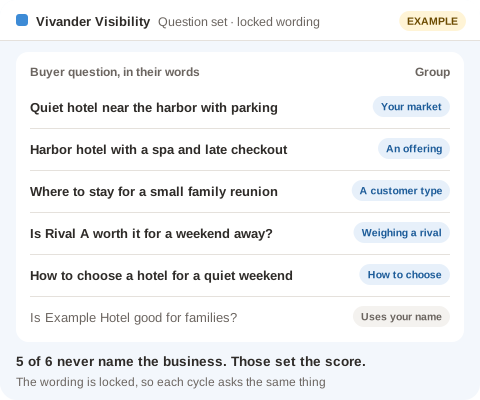
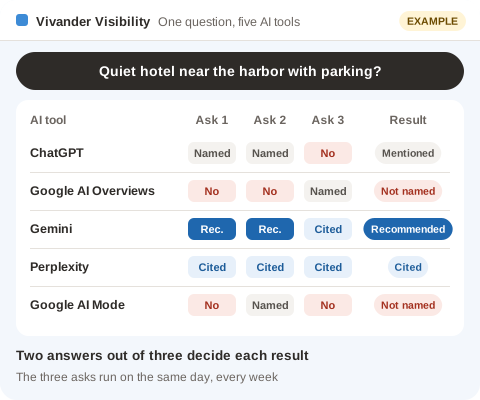
A score, the answers behind it, and a to-do list
- A visibility score for your business, re-measured each week on a fixed set of buyer questions.
- Every AI answer saved, so any number on the page opens the answer that produced it.
- The rivals AI named in your place, and how often.
- An action plan ranked by effect, with who on your team can make each change.
Go deeper where you want to
Each page below explains one part in plain words. Come back here when you are ready to start.
How it works, page by page
What gets asked, what is saved from each answer, and what you see every week.
Plans priced by what each measurement costs
Three plans at set prices, and two built to order. Prices load from our pricing page.
Already collect AI answers?
Bring them, and we score them.
Why the numbers can be trusted
Three runs per question, a four-week window, and the interval printed beside the score.
Had an audit?
Its results become your starting point. Without one, your first cycle sets the baseline.
Answers before you start
What a plan includes, how long setup takes, and what happens to your data.
Find out who AI recommends in your place.
Create your account and choose a plan. Your first measurement shows the answers AI gives your buyers.