
Measure what your customers use. Pay for nothing else.
Choose the AI engines, how many questions are scored and how often we measure. The monthly price updates as you choose.
A smaller plan measures fewer engines or fewer questions. It never measures them less carefully.
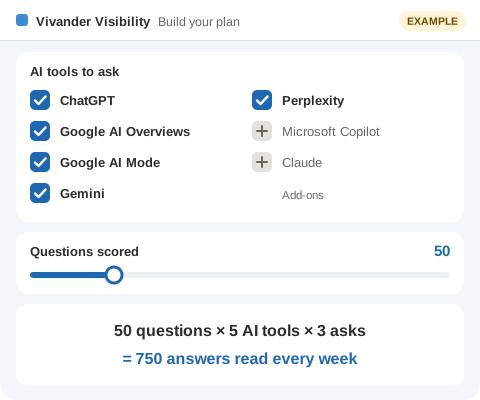
Choose what to measure
Five choices set the plan. Every question is asked three times on every engine, every cycle. The price updates after each choice.
Which AI engines
Each engine is a separate measurement, repeated every cycle, so each one adds to the price. Start with the engines your customers use.
You can add one later. The dashboard marks the date it joined, so a new engine never reads as a change in your visibility.
Loading the engines…
How many questions are scored
These are the questions your score is built on, written the way your customers ask them.
The set covers each kind of customer and each reason they ask: ready to buy, comparing options, or researching.
Above about 24, extra scored questions mostly repeat a combination the set already covers.
Questions that name your business
A few questions use your name, to check what AI says about you when asked directly.
They are reported on their own and never counted in your score, because a question with your name in it is easy to appear in.
Watch list
Every other question you care about. Each one is asked three times on every engine, every cycle, like the scored questions.
Watch questions are reported one by one and never counted in your score. Set the list to zero if the scored questions cover what you need.
How often we measure
Weekly is the default, and the cadence of Starter, Pro and Advanced. A trend is called only after three measurements, so weekly shows one within a month.
Every two weeks or monthly is offered only on a custom plan like this one. Monthly costs less and takes three months to show a trend.
Why you do not need every engine
Every engine you add is measured on every question, every cycle. Two engines double that work and the price.
Google's AI answers
They appear above the search results your customers already use.
ChatGPT
A common first stop for a question.
Perplexity
It lists the websites behind each answer, at a low cost.
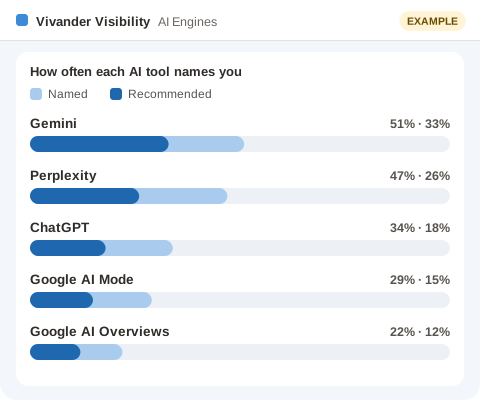
Google's AI answers are two engines, AI Overviews and AI Mode. With Gemini, those are the five we recommend to start.
Add Claude or Microsoft Copilot when your buyers use them at work. The Advanced plan already includes Copilot.
Every AI tool searches the web. We buy the others' answers at a flat rate; Claude's we collect ourselves and pay for each page it reads.
We add Claude at that cost, with nothing added.
Why you do not need every question scored
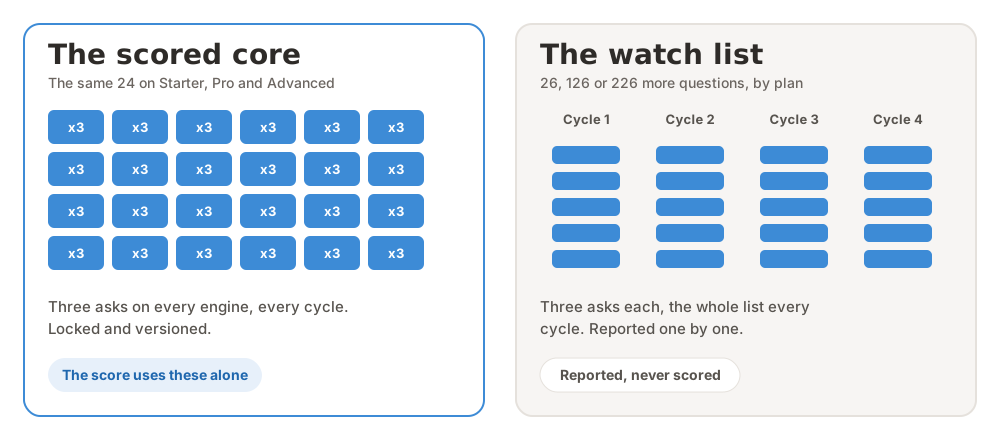
The score is built on a fixed scored set. A watch list keeps every other question in view, asked as often.
The score moves each time a question joins or leaves the list, so one week cannot be compared with the next.
The scored set covers each type of customer and each reason they ask. Watch questions are reported one by one.
Questions about building a plan
Can I change my plan later?
Yes. Engines, questions and frequency can change at any renewal. A change in engines is marked on every trend chart from the date it applies.
Does a smaller plan give me a less accurate score?
No. Every question is asked three times on every engine you choose, and two answers out of three decide each result.
A smaller plan covers fewer engines, questions or weeks.
What is not included?
Additional runs outside your schedule use run credits, which are added to an active plan.
Not sure which engines your customers use?
Tell us about your customers and we will suggest the engines and questions to start with.
Engines can change at any renewal.