
See whether AI recommends your business, and what to fix
We ask AI tools the questions your buyers ask and show you who they name, who they recommend, and what to fix first.
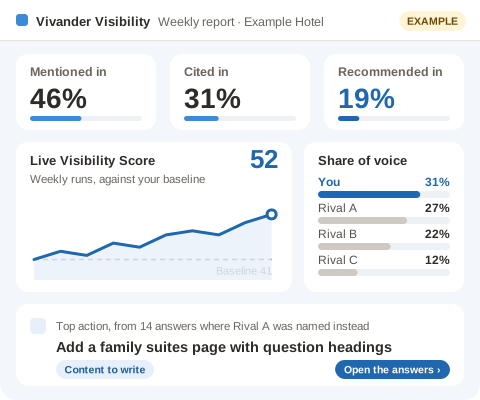
One page that answers four questions
Are you named, are you recommended, who leads, and what to do next. Every number opens the AI answers behind it.
What changes for you
Know where you stand
How often AI names and recommends you, on the tools your buyers use.
See who wins instead
The competitors AI names in your place, question by question.
Fix the right things first
A short list of actions, each with the answers that support it.
Three steps
- Choose a plan and your questionsWe suggest the questions your buyers ask, or you add your own.
- We ask AI tools on a scheduleEach question three times on each tool, so one odd answer does not decide a result.
- You read the results and actWho AI names, who it recommends, and what to fix, with the answers behind each.
Choose how you want to measure
Managed plans collect answers for you on a schedule. Bring Your Own Answers scores answers you collect and upload.
How it works, in detail
The full method is on Approach. The sections below cover what is asked, what is saved and what each score means.
After an audit, monitoring from scratch, or your own answers
All three end on the same dashboard, read by the same judge. They differ in where the questions come from and who asks the AI tools.
Keep tracking your audit
- Your questions and baseline come from the audit.
- We set up your account, for you or your organization.
- Set your password and sign in.
- Each cycle measures the same questions again.
Monitoring
- Create your account and confirm your email.
- Tell us about your business in a few lines; we build your questions.
- Your plan sets how many are scored, name you, and are watched.
- We run your first measurement, then every cycle.
No audit, so no audit baseline or Visibility Stack Score. Your first measurement is your starting point.
Start monitoringBring Your Own Answers
- Create your account and confirm your email.
- Download the template, or export from your current tool.
- Upload the file. We check every row before any charge.
- Every answer is scored and lands on your dashboard.
Prices are on the pricing page. See what monitoring shows on real accounts.
What gets asked, where, and how often
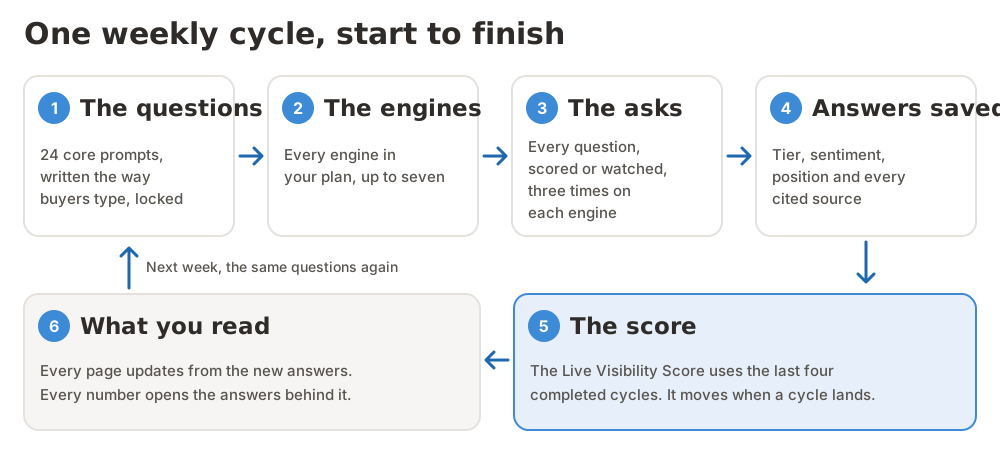
Each prompt is asked on every engine in your plan, three times every cycle. That holds for every scored and watched question.
A prompt, never a keyword
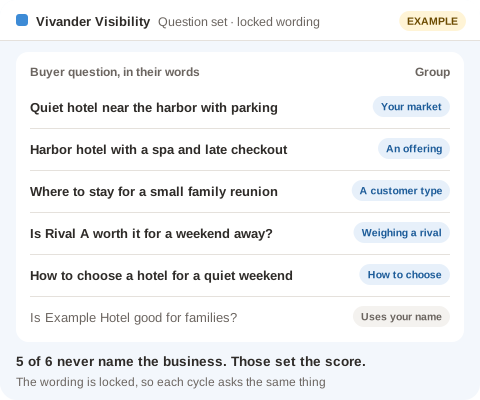
A prompt is a question written the way a real buyer types it.
It is drawn from your intake: the offer, the buyer, the market and the intent.
Seven engines, and why each one
Five are in every plan. Advanced adds Microsoft Copilot. Copilot and Claude can be added to any plan; Agency and Enterprise include both.
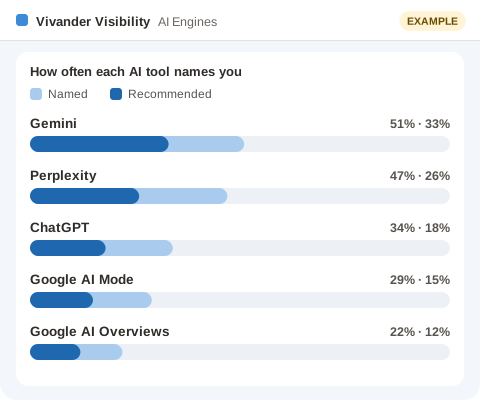
- ChatGPT, every plan, because it is where most consumers ask first. We read it, and Gemini, on their public websites, as a buyer sees them.
- Google AI Overviews, every plan, the answer block above the organic results on Google itself.
- Google AI Mode, every plan, Google's conversational answer, for buyers who ask Google a follow-up question.
- Gemini, every plan, for what Google's own model says.
- Perplexity, every plan, because every answer carries citations. It is the cleanest read on whether your site is used as a source.
- Microsoft Copilot, included in Advanced and an add-on to Starter or Pro, for the answers built into Bing, Edge and Windows.
- Claude, an add-on to any plan, at our cost, and included in Agency and Enterprise, for considered purchases and enterprise questions.
Three asks for every question, every week
Each cycle, every question, scored or watched, is asked three times on every enabled engine, with retrieval on.
Three samples per cell turn one reading into a measurement with a range, and two answers out of three decide each result.
In testing, we observed AI tools giving different answers to the same question from one try to the next. The platform never hides the range.
What is saved from every answer
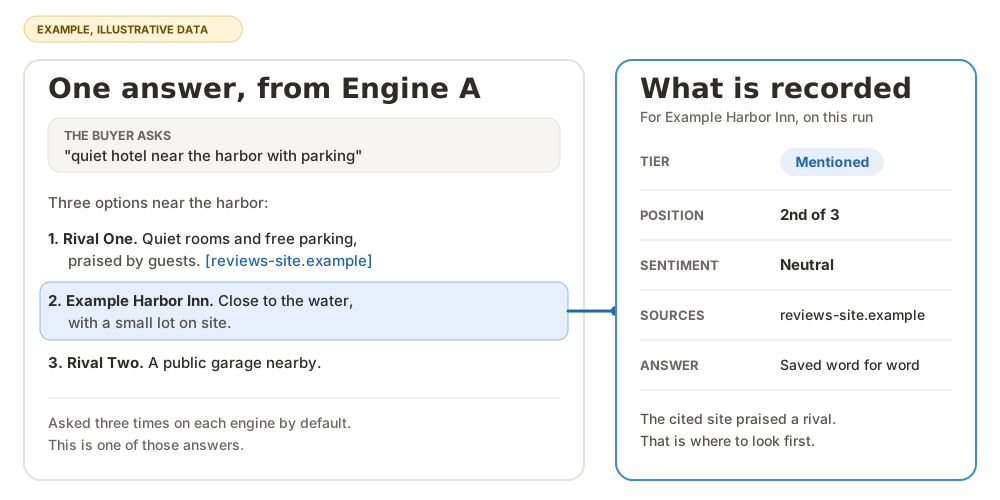
Each answer is saved in full, with five readings taken from it.
| Recorded on every run | Why it matters |
|---|---|
| Full answer text | Every number on the platform opens the answer that produced it. Nothing is a summary you take on trust. |
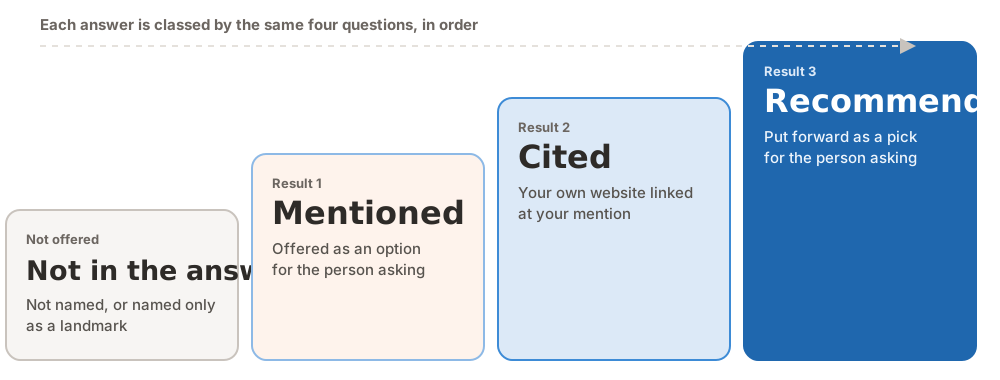
| Tier | Invisible, mentioned, cited or recommended. A rubric with four gates decides it. Cited is decided by where the link sits in the answer. |
| Sentiment | Positive, neutral, negative or mixed, with a score that tracks over time. A negative mention is a different problem from an absence. |
| Position | Where you sit in any list the AI produced. First of three is a recommendation. Seventh of nine is a mention. |
| Every cited source | The pages the AI drew on. This is how you learn which directory, review site or article put a rival in the answer. |
| Answer surface present | When a platform gave no AI answer for a prompt, the run leaves every denominator. It is never counted as invisible. |
A locked set of prompts, so the trend measures you and not the questions
Every change to the prompt set changes the ruler. The platform keeps the ruler fixed.
Many monitoring tools let you add and remove prompts and keep reporting one number. The trend line stops meaning anything.
The score uses a locked, versioned core. A change writes a new version and marks a break on the trend chart.
How the ruler stays fixed
- A core of twenty-four prompts is built from your intake, at the highest commercial weight.
- It covers the buyer personas and intents that lead to a purchase.
- The core is locked and versioned. The headline score is computed on it alone.
- A change to the core states its reason and marks a break on the trend chart.
- Prompts beyond the core are watched every cycle, three asks each. They feed the per-prompt view and the answers feed, and enter no composite.
This keeps a Starter customer's score comparable to an Agency customer's for the same brand.
A prompt that contains your name is easy to appear in. Counting it would inflate the score, and more of them would inflate it more.
Branded prompts are built from your verified facts across ten dimensions. They are reported as brand recognition, outside every score.
Brand recognition beside unbranded visibility separates two findings.
"AI does not know this brand" and "AI knows it and does not put it forward" need opposite fixes.
The cohort follows a length mix and cue classes drawn from how people type into these tools.
A prompt that reads like a search string is rejected before it is ever asked.
Two scores, and what each one is for
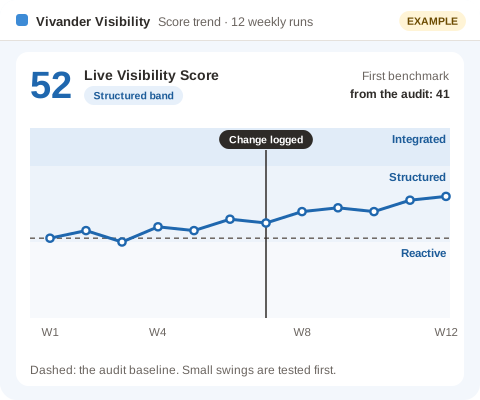
In plain terms: the Live Visibility Score, out of 100, says how often and how well AI puts you forward. Your first cycle sets the baseline it is read against.
Live Visibility Score
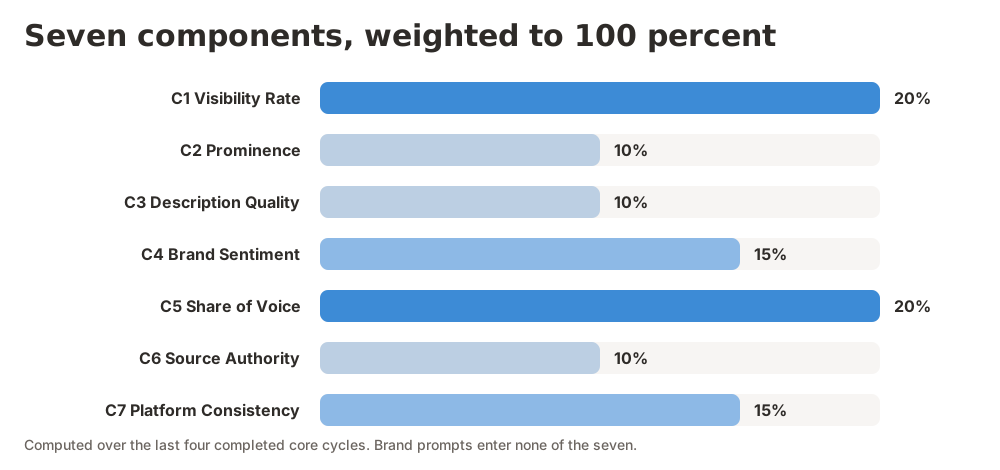
The monitoring score. Seven weighted components, computed over the last four completed cycles.
The number changes when a cycle lands and at no other time.
| Component | Weight |
|---|---|
| Visibility Rate | 20 |
| Share of Voice | 20 |
| Brand Sentiment | 15 |
| Platform Consistency | 15 |
| Prominence | 10 |
| Description Quality | 10 |
| Source Authority | 10 |
Every reading carries its sampling disclosure.
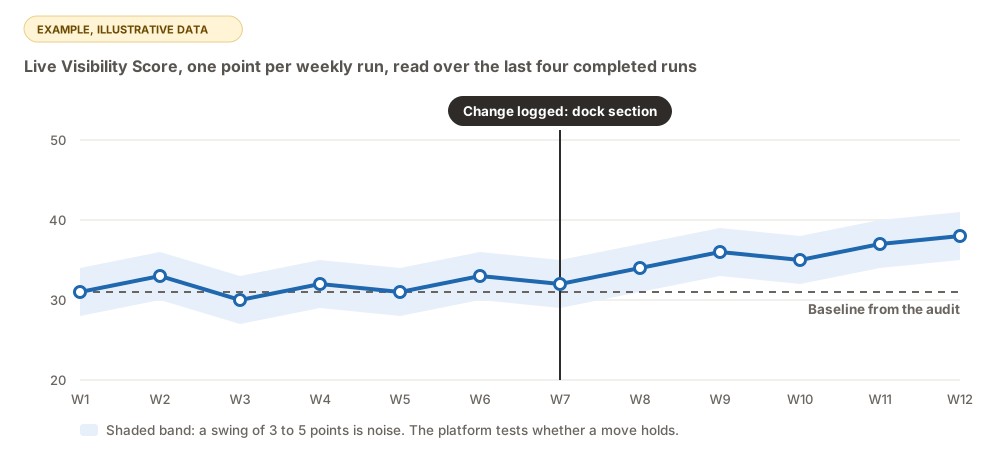
A small movement can be run-to-run variation. How much depends on the metric, the number of answers and the AI tool.
The platform compares the same questions before it calls a change, instead of drawing an arrow.
Your baseline
Every website gets a baseline on its first completed cycle. Each later reading is compared with it.
The baseline stays fixed, so a change in the trend reflects a change in the answers.
- How accurately AI describes you.
- Whether your brand collides with a namesake.
- What the AI said when asked about you by name.
Each one is reported on its own page. Scoring accuracy would reward invisibility, and scoring brand prompts would reward having many of them.
Our approach explains each of these rules in short pages, one topic each.
Every page a customer gets, and what it is for
The same pages on every plan. A plan changes how much is measured, never which page or which score.
Read the score
Where the number stands, against what, and why.
Dashboard
The current reading against the baseline, the trend over completed cycles and the visibility funnel.
A metric explorer cuts every number by platform, bucket, persona and intent. Each tile opens the prompts behind it.
Assessment
The frozen baseline from your first cycle and the live score beside it, component by component.
It shows the band comparison and the component holding the total down.
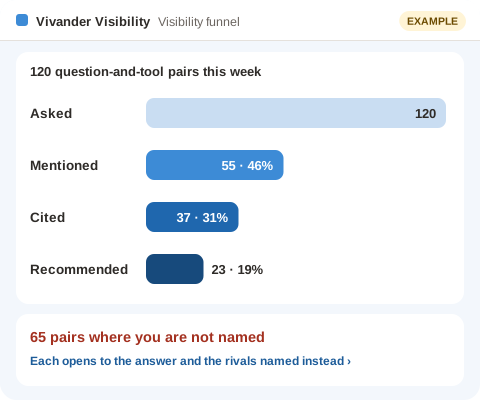
Visibility Funnel
How often you are named, cited and recommended, each counted on its own. Every recommendation is also a mention; a citation can appear without your name.
Named often and recommended rarely points to a corroboration problem. Reach is not the issue there.
Scorecard
A one-page reading for the leadership meeting.
It shows the score, the band, the movement since the last cycle and the three findings that matter most.
See the answers
What the engines said, word for word, and who they named.
AI Answers
The raw feed: every answer every engine gave, with tier, sentiment, position and citations. Filter it and export it.
Flag an answer that states something false about you and it enters the accuracy review queue.
Prompts
The cohort and the watch list. Each prompt shows its bucket, persona, intent, priority and results over time.
You can propose your own prompts. They are measured beside the core and never move it.
Competitors
The rivals you named, their share of voice against yours, and the prompts where each displaced you.
It lists the sources that put them there, with your state on each source. A local prompt names its place.
Brand Answers
What AI says when asked about you by name, across ten fact dimensions.
They are identity, offer, specialization, market, geography, scale, terms, credentials, proof and reputation.
Facts you confirmed that your site never states come first. Publishing them needs no third party.
Act on it
The work list, and the pages and profiles the engines read.
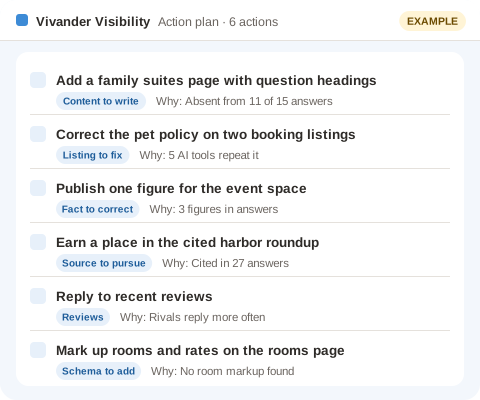
Action Plan
Recommendations ranked by expected effect. Each carries the finding it fixes, the effort, who controls the surface and a status.
It is the work list for your team or your agency.
AEO, content architecture
Whether your pages hold answer-shaped content and the structured data that describes it.
It covers the practices that help an engine lift an answer from your site rather than a third party's.
AI crawler check
Every week we read your robots.txt against more than 40 AI crawlers.
You see at once if a plugin or firewall update shut one out.
Social Corroboration
The profiles and listings that describe you, whether each agrees with your site, and whether each belongs to you.
A profile that shares your name and belongs to someone else is a collision. The platform flags it and never counts it as a win.
Keep the record
The history behind every trend, and the account itself.
Change Log
A dated record of every change to the cohort, the platforms, the method or the model settings.
When the trend breaks, the log says why.
Websites and Settings
Add a website, set its schedule and name its competitors.
Invite your team, with full or read-only access, and export any table as CSV.
Reports and the assistant
Your reports in the report viewer.
An assistant knows the methodology, the book and your account. Ask about a number on the page you are reading.
What you will see every week
Monitoring re-asks your buyers' questions every week and reports each run against the last.
Every example below uses a fictional business, Example Harbor Inn, with fictional rivals, websites and numbers. None of it is client data.
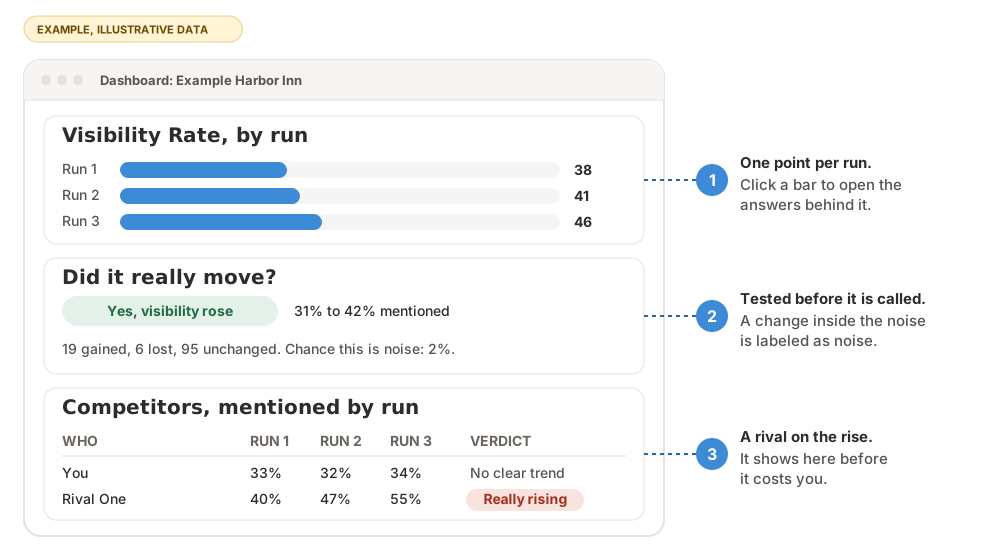
Score Trend
The seven parts of your Live Visibility Score, one point per run, so you see which part moved.
Did it really move?
Compares two runs on the same questions and tools. It says whether a change is real or within run-to-run noise.
Visibility really rose between Run 2 and Run 3.
Is standing still costing you?
Your mentions and each competitor's across runs, with a verdict on each trend. A rival's rise shows before it costs you.
| Measure | Run 1 | Run 2 | Run 3 | Verdict |
|---|---|---|---|---|
| You: mentioned | 33% | 32% | 34% | No clear trend |
| Rival One: mentioned | 40% | 47% | 55% | Really rising |
| Rival Two: mentioned | 21% | 20% | 22% | No clear trend |
Citation Ledger
Every website AI cited, by kind and authority tier, with whether it is new this run, still active or fading.
| Website | Type | Citations | Status |
|---|---|---|---|
| reviews-site.example | review platform | 41 | Active |
| photo-social.example | social | 17 | New |
| city-directory.example | directory | 12 | Active |
| local-news.example | news | 6 | Fading |
| travel-blog.example | blog | 4 | New |
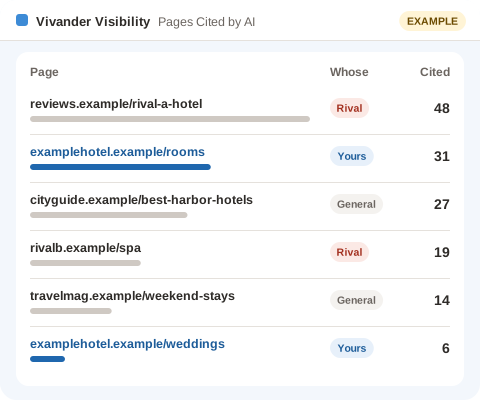
Your Pages Cited by AI
Which of your own pages AI used as a source, grouped under your site's address, each page named by its path.
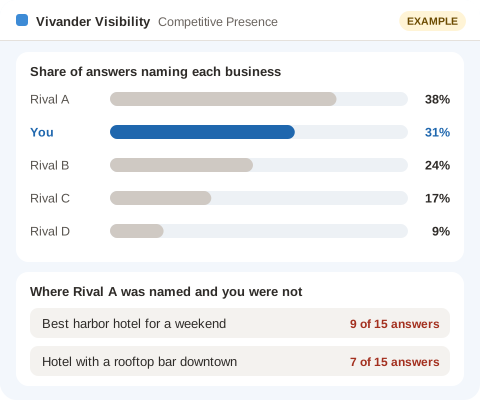
Competitors head to head
For each rival, answer by answer: named without you, named together, or you without them, and the questions they win.
| Competitor | Named without you | Together | You without them | Standing |
|---|---|---|---|---|
| Rival One | 28 | 14 | 9 | Ahead of you |
| Rival Two | 7 | 10 | 19 | Behind you |
| Rival Three | 11 | 6 | 12 | Even with you |
Action Plan
Numbered steps built from the latest run, each with the evidence behind it.
- Get listed Claim and complete your listing on city-directory.example. AI cited it in 14 answers that did not name you.
- Fix a fact State "Parking is included for guests" on your website and your Google Business Profile. AI stated it wrongly in 5 of 18 answers.
- Win a question Answer "quiet hotel near the harbor with parking" on a page of your own, with a heading that asks it.
AEO, page by page
For each page, the buyer question it should answer and the exact edits to its H1, H2, H3 and body text.
Social Presence
Whether AI finds posts about you on the social sites it reads, and what to do where it does not.
| Social site | Found you? | Posts about you | Times AI used it | What to do |
|---|---|---|---|---|
| photo-social.example | yes | 8 of 10 | 17 | Working. Keep it current. |
| video-social.example | no | 0 of 10 | 9 | Start here: AI uses this site and you are not on it. |
| forum-social.example | yes | 2 of 10 | 0 | Post answers to the questions guests ask. |
AI Engines
What each AI engine relied on when it answered about you, and whether you are present on those sources.
AI answers change first, and traffic follows later
The platform measures what AI tells your buyers. Your own analytics show what those buyers did next.
A listing, a page or your schema.
The visibility numbers move first.
Your own analytics show the change later.
Expect a lag
A structural fix shows in the visibility numbers before it shows in traffic. The platform shows that lag openly.
The platform does not estimate traffic or sales. Read its numbers beside your own reporting.
It does not prove revenue. It shows whether AI put you in the answer, how, and how often, on the questions your buyers ask.
Pair it with your booking data to see both sides. Read alone, it is a leading indicator, which is what it is designed to be.
Questions people ask before they start
Is this an SEO tool?
No. It measures how AI answer engines treat your business on the questions your buyers ask. Search rankings are one input among many.
A business can rank well and be absent from AI answers, and the reverse.
The platform does not track keyword rankings, and it does not do the optimization work. It tells you whether the work is working.
What does the subscription do, and what is left to my team?
The platform asks the questions, reads every answer, scores it and writes an action plan from what it found, every week.
Making the changes is your team's work, or your agency's. The next cycles show whether each change moved the answers.
How soon do I see a first result?
Once your plan starts and you approve your questions, you run your first measurement. Answers appear on your dashboard as each AI tool responds.
The score reads the last four weekly cycles. Before four have run, it reads the cycles you have, and its label says how many.
How is the Live Visibility Score different from the Visibility Stack Score?
The Live Visibility Score is about AI answers alone, measured every week.
The Visibility Stack Score comes with an audit. It also grades your website, your content and the sites that talk about you.
Why does the same prompt give different results on different days?
In testing, we observe that the engines vary from one try to the next, and their retrieval changes.
So every question, scored or watched, is asked three times on every engine every cycle. Two answers of three decide each result.
In testing, three same-day asks split in about 1 in 7 question and engine pairs. One ask a day cannot see that split. The math
The score uses the last four completed cycles.
A single answer is an anecdote. The platform reports the pattern and shows you the range.
Can I add my own prompts?
Yes. Your prompts are measured on the same instrument and reported beside the core.
They never enter the score, so the number stays comparable over time and between customers.
If a prompt earns a place in the core, moving it there writes a new cohort version with a reason.
What if AI says something false about my business?
The Brand Answers page compares what AI states against your verified facts and your own site. The AI Answers feed has a review queue for wrong claims.
The highest-yield row is a fact you confirmed that your site never states. You can fix it by publishing.
Accuracy is reported, never scored, so being invisible never looks like being accurate.
Where does my baseline come from?
Every website gets a baseline on its first completed cycle. Each later cycle is read against it.
Had an audit? Its results become your starting point. About the audit
Which engines are included?
ChatGPT, Google AI Overviews, Google AI Mode, Gemini and Perplexity are in every plan.
Advanced adds Microsoft Copilot. Claude can be added to any plan at our cost, and Agency and Enterprise include it. The pricing page lists the engines of each plan.
Scores are computed over the engines that ran. The platform records which ones were left out and why.
Two accounts with different engine sets are never silently compared.
See the platform on your own market.
Choose a plan and create your account. After you confirm your email, you choose a password, start the plan, and add your questions.